


Basement Lighting Done Right: Recessed Lighting Tips for Low Ceilings
Basement lighting works best with layers. Recessed lights can handle the main room lighting, while task lights support stairs, work areas, gyms, and seating zones. For low ceilings, slim wafer lights and canless fixtures help keep the room open while reducing shadows. Warm color temperature, high CRI, and dimming can make the basement feel more comfortable and finished.
Quick Summary
Basement lighting works best with layers. Recessed lights can handle the main room lighting, while task lights support stairs, work areas, gyms, and seating zones. For low ceilings, slim wafer lights and canless fixtures help keep the room open while reducing shadows. Warm color temperature, high CRI, and dimming can make the basement feel more comfortable and finished.

Horror movie monsters love to hide out in basements, where uneven lighting, corner shadows, and that single bulb in the middle of the room make everything feel creepy. That is why basement recessed lighting can make such a big difference. It’s fiction, but it’s rooted in real biology and psychology. In our hunter-gatherer days, darkness hid countless dangers, from big predators and small but lethal critters to treacherous terrain.
Technologically we have evolved, but psychologically, when we descend basement steps into the dark, that old uneasiness can still kick in. So if you want a basement that doubles as a real living space, you need lighting that leaves the “monsters” no place to hide.
This guide will help focus on installing lighting in unfinished basements, giving you a step by step guide to choosing the best basement recessed lights, and lighting setup tips for the most popular basement conversions. Read on to find out how you can transform drab basements into fab living and working spaces.
Start with a Basement Lighting Plan
If you want your basement to feel like a real living space, you can’t add lights as an afterthought and expect the room to feel inviting. The most consistent advice from top design and basement remodel sources is to start with a simple layered plan: one type of light for the whole room, another for the activities, and a third for the mood.
Ambient lighting is your base “see the room clearly” layer. Basement ambient lighting usually comes from wafer recessed lights or low-profile surface mounts. On top of the ambient lights, the task lighting layer, though gimbal ceiling lights or surface mount flat panels, supports detail-oriented activities. Lastly, accent basement lighting adds mood and depth to the place. A mix of all three basement lighting layers is the difference between a cave-like basement and a welcoming one.
Once you separate your plan into these layers, everything gets easier. You light the basement evenly first, add the right light where people do things, and finish with accents that make the space feel intentional. Basements that nail these three layers are the ones that stop feeling like, well, basements.
Pick the Right Basement Lighting Type
Basement Stairs / Entry Path Lights
Task lighting is safety lighting, too. Make stairs, landings, and the main walkway evenly bright with wall lights, step lights, or well-placed ceiling fixtures. If there's a stairway with more than 6 risers between the basement and the floor above, NEC guidelines require a light switch at the top, bottom and every landing with an entryway in between.
Basement Man Cave Lighting
If you're converting the basement into a man cave-style retreat, make sure your task lighting does not wash out the TV screen. Use soft side light like wall sconces or floor lamps near seating, plus a dimmable bias light behind the TV to cut glare and eye strain. Keep bright overhead light optional so movie nights stay cozy.
Basement Bedroom / Guest Suite Lighting
The goal is an upstairs-quality feel, not a “sleeping in the basement” vibe. Since bedrooms are an all purpose space for sleeping, reading and dressing, a dedicated light for each zone works best here. In addition to the ambient lighting, place a reading by the side of the bed, and a dedicated closet light at eye level to keep your face and body shadow-free. An accent light along the ceiling edge or behind a mirror can adds a touch of beauty and complete the room.
Basement Hobby Corner / Workshop Lighting
These spaces also need a dedicated focused task light layered over the ambient light. A directional desk lamp or shop light keeps the work area bright without washing out the fine details. Place and aim the fixture to cover the work zone while minimizing spill, so the rest of the basement can stay softer.
Basement Gym / Flex Space Lighting
Workout zones benefit from brighter, higher-output task lighting. Use adjustable heads or a dedicated bright fixture aimed where you train, and put this area on its own switch so the rest of the basement doesn’t have to stay wide-awake.
Let Basement Light Color, CRI, and Dimmability Set the Mood
In a basement, lighting color quality is not a bonus detail. It is the difference between a space that feels cozy and alive, and one that feels gray or off even when it is bright. Three specs drive that outcome: color temperature, CRI, and dimmability.
Optimizing Basement Lighting Color Temperatures
In a basement lounge, warm light around 2700K to 3000K CCT helps replace missing daylight and makes the room feel closer to an upstairs space. Warm CCT basement lights are the sweet spot for living areas and bedrooms because they read soft, welcoming, and residential. If you have utility zones like a gym, workshop, or laundry, a slightly cooler temperature can work there, but keep those cooler pockets contained. Mixing warm and cool light in one open basement usually looks patchy and unsettled.
The importance of High CRI for Basement Lighting
Basement lighting CRI matters even more, since basements have few visual cues from outside light. Aim for CRI 90 or above anywhere meant for relaxing, hosting, or sleeping. Higher CRI makes paint, wood, fabrics, art, and skin tones look rich and true instead of muted or sickly. Lower CRI is a hidden reason remodeled basements can still feel flat.
Why Basement Lights Should be Dimmable
Dimmability should be a critical component of basement lighting, since basements shift roles throughout the day and one fixed brightness never fits every moment. Dimmable basement lighting lets you run bright, clean light for workouts or work on hobbies then drop to a softer level for movies, conversation, or bedtime. The key is coordinating your brightness levels across ambient, task, and accent layers so the whole basement space grows dim together.
When color temperature is unified, CRI is high, and everything dims well, the basement stops feeling like a separate world downstairs and starts feeling like a real part of the home.
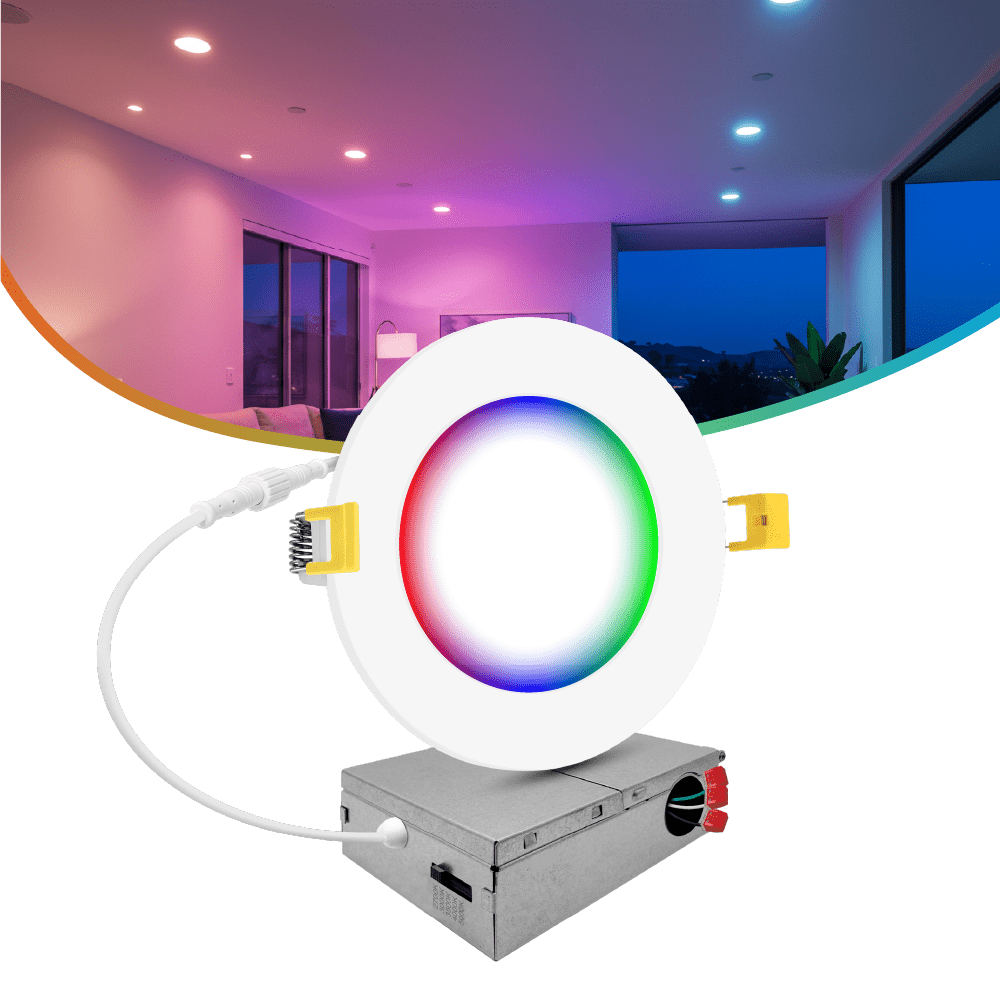
4in Smart RGBW Basement Recessed Light
$29.99
Installs in finished basement ceilings. Tunable to any color for the ultimate versatile space.
Learn MoreBring Your Basement Recessed Lighting Plan Together
A finished basement should feel bright, comfortable, and easy to use, not dark or disconnected from the rest of the home. With the right recessed lighting layout, slim fixtures, warm color temperature, high CRI, and dimming control, even a low-ceiling basement can feel open and welcoming. Strong lighting choices also make each zone work better, from stairs and guest rooms to gyms, media areas, and hobby corners.
Ready to brighten your basement the right way? Explore NuWatt recessed lighting options and choose fixtures that fit your ceiling height, room layout, and lighting goals.
FAQs
What Type of Recessed Lighting Works Best for Low Basement Ceilings?
Slim wafer lights or canless recessed lights are often the best fit because they take up less ceiling space and create a clean look.
What Color Temperature Is Best for Basement Lighting?
Warm light around 2700K to 3000K works well for basement living rooms, bedrooms, and lounges. Cooler light can fit gyms, laundry rooms, or workshops.
Should Basement Recessed Lights Be Dimmable?
Yes. Dimmable lights let the basement shift from bright task lighting to softer light for movies, guests, or relaxing.
Does Basement Lighting Need High CRI?
High CRI lighting is helpful because basements often lack natural light. A CRI of 90 or higher makes colors, finishes, and skin tones look more natural.